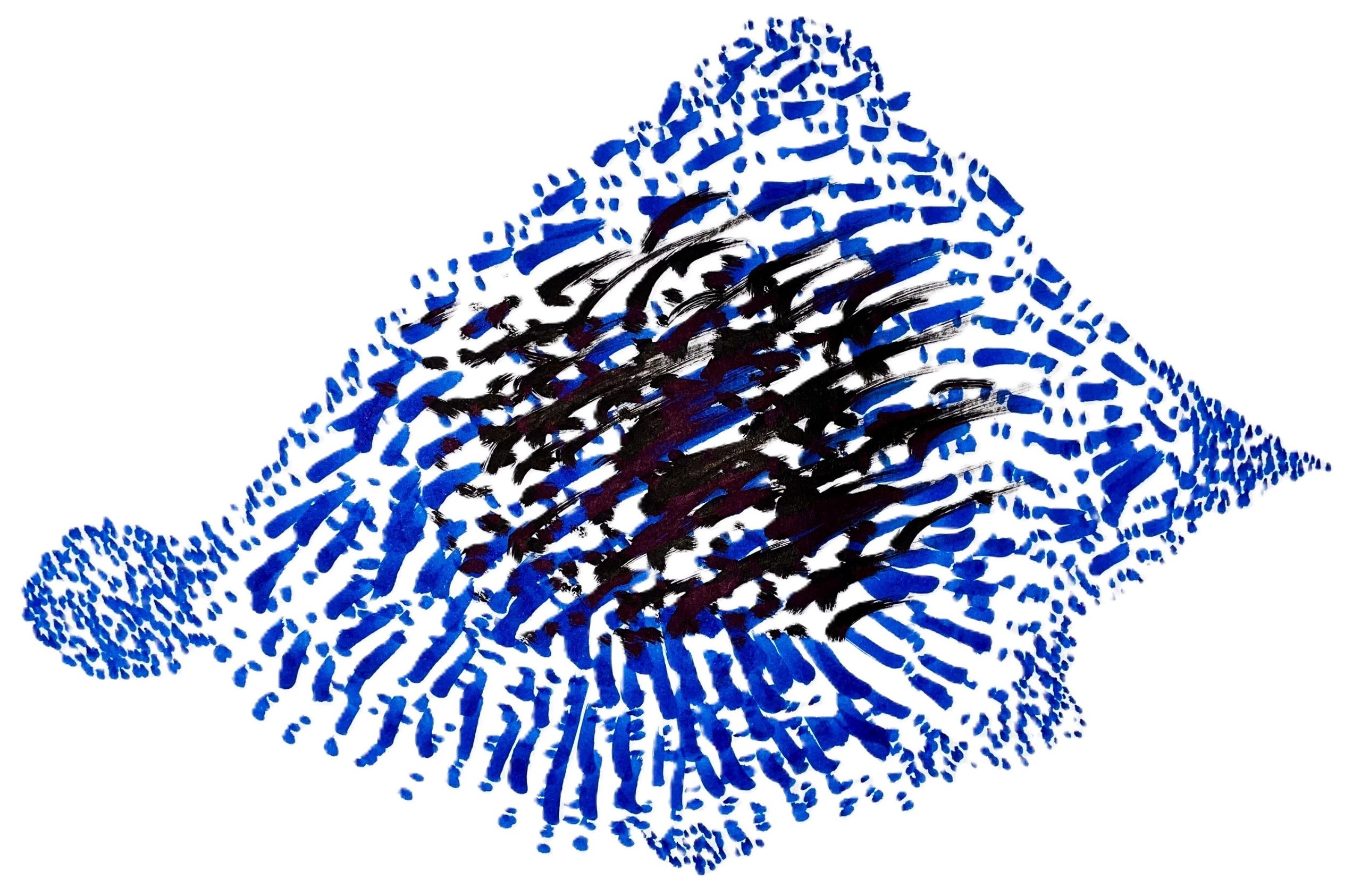
08-11 août 2026.
Feutre à alcool sur papier Monali 160 A4 sans acide.
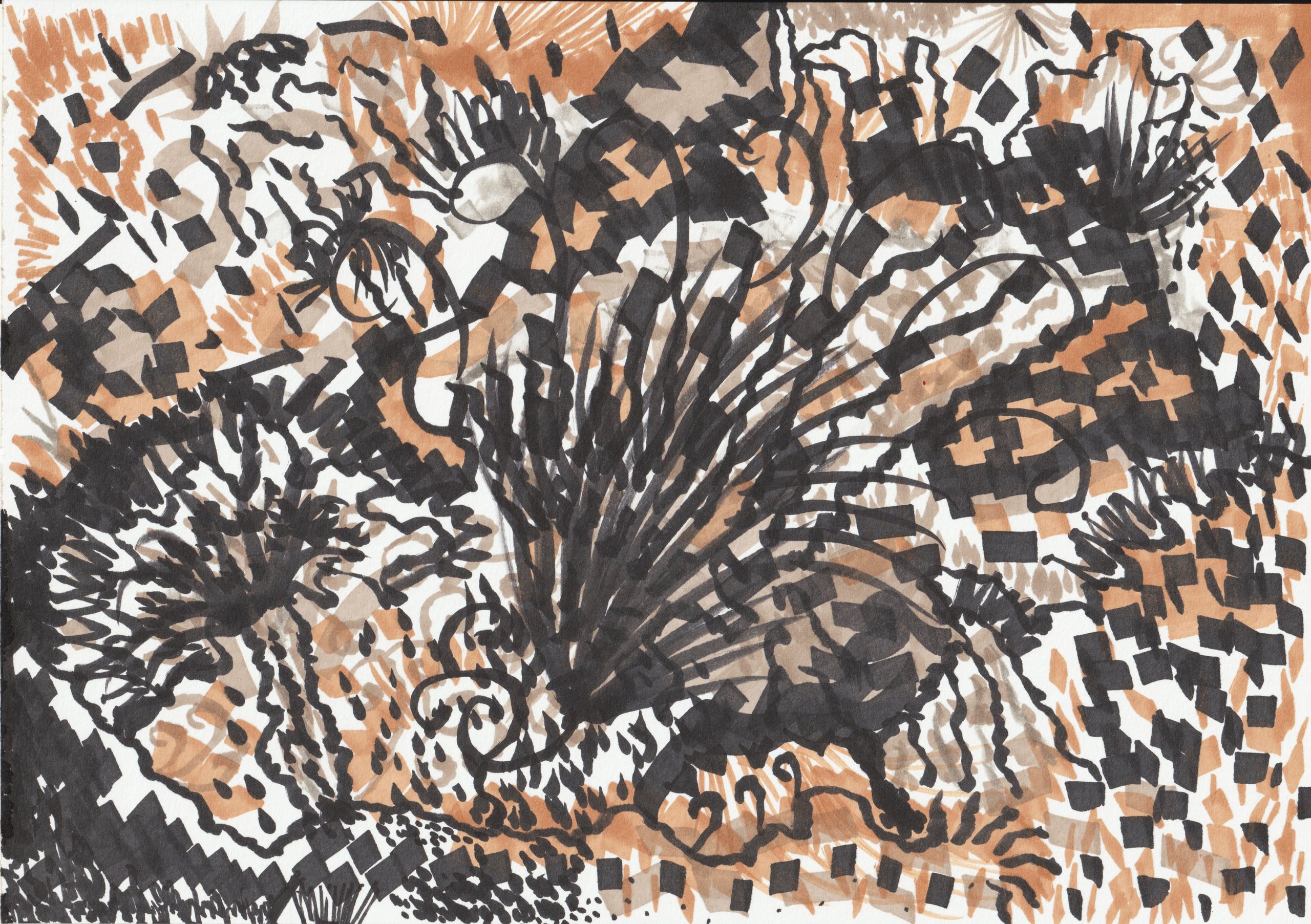
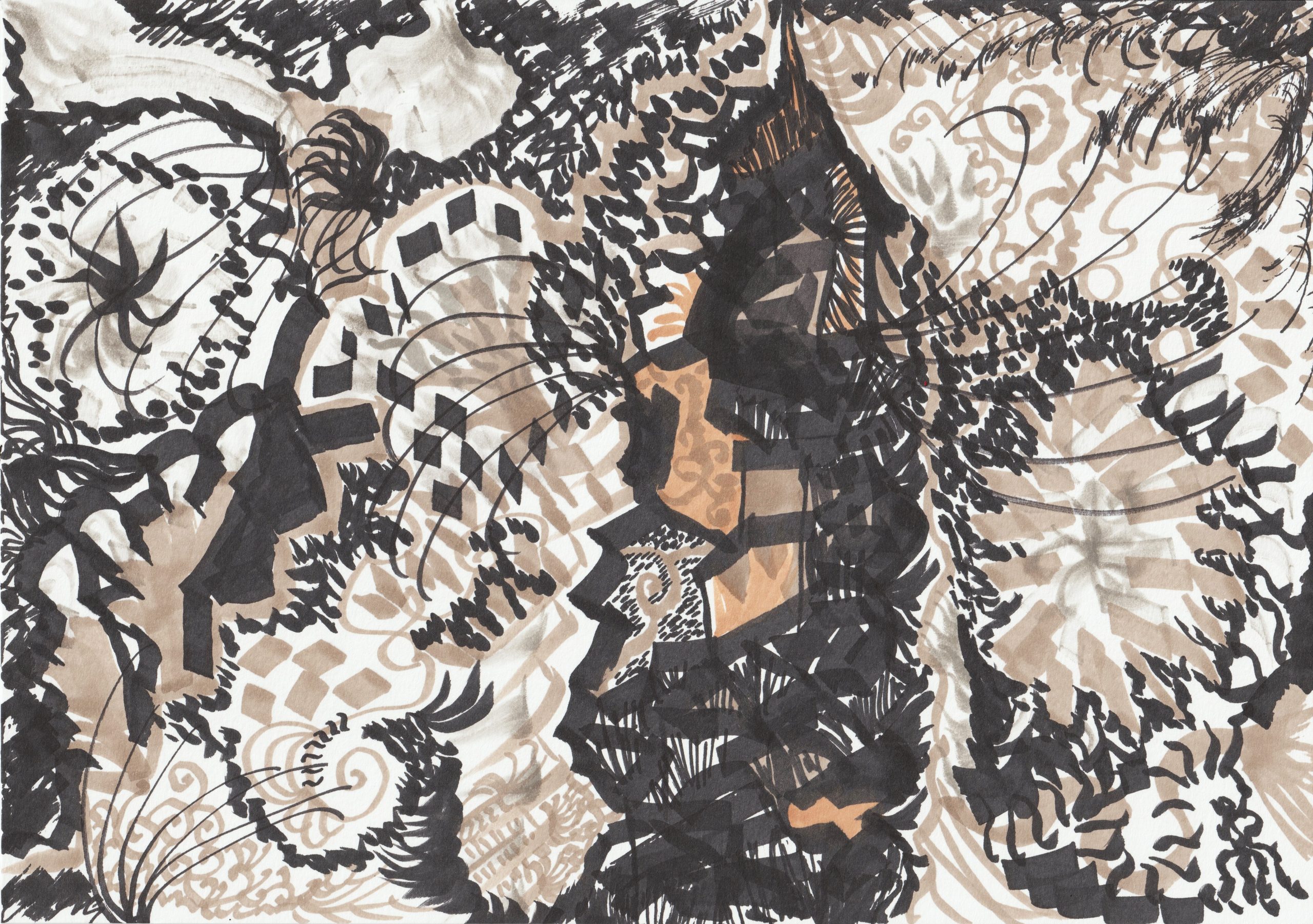
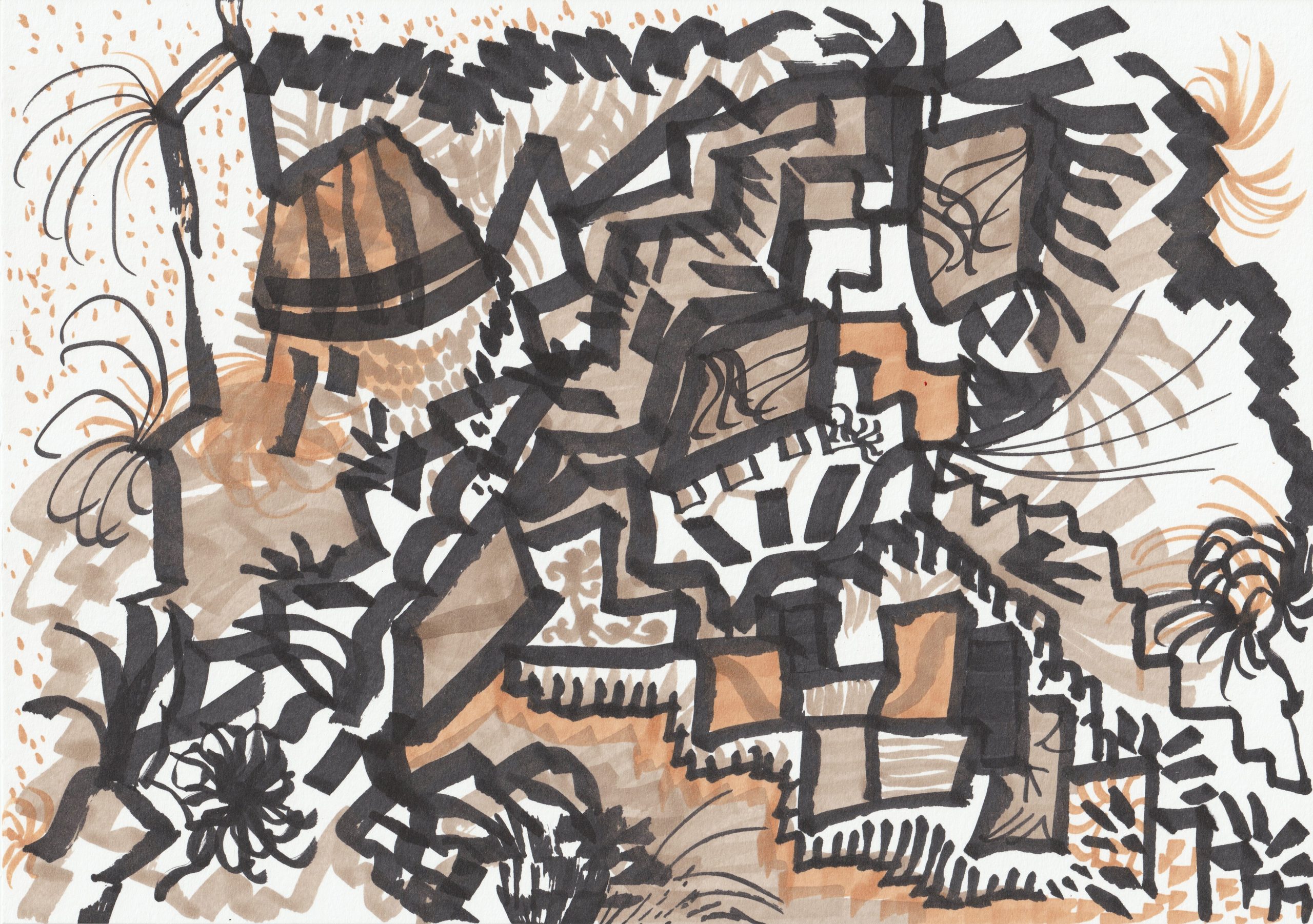
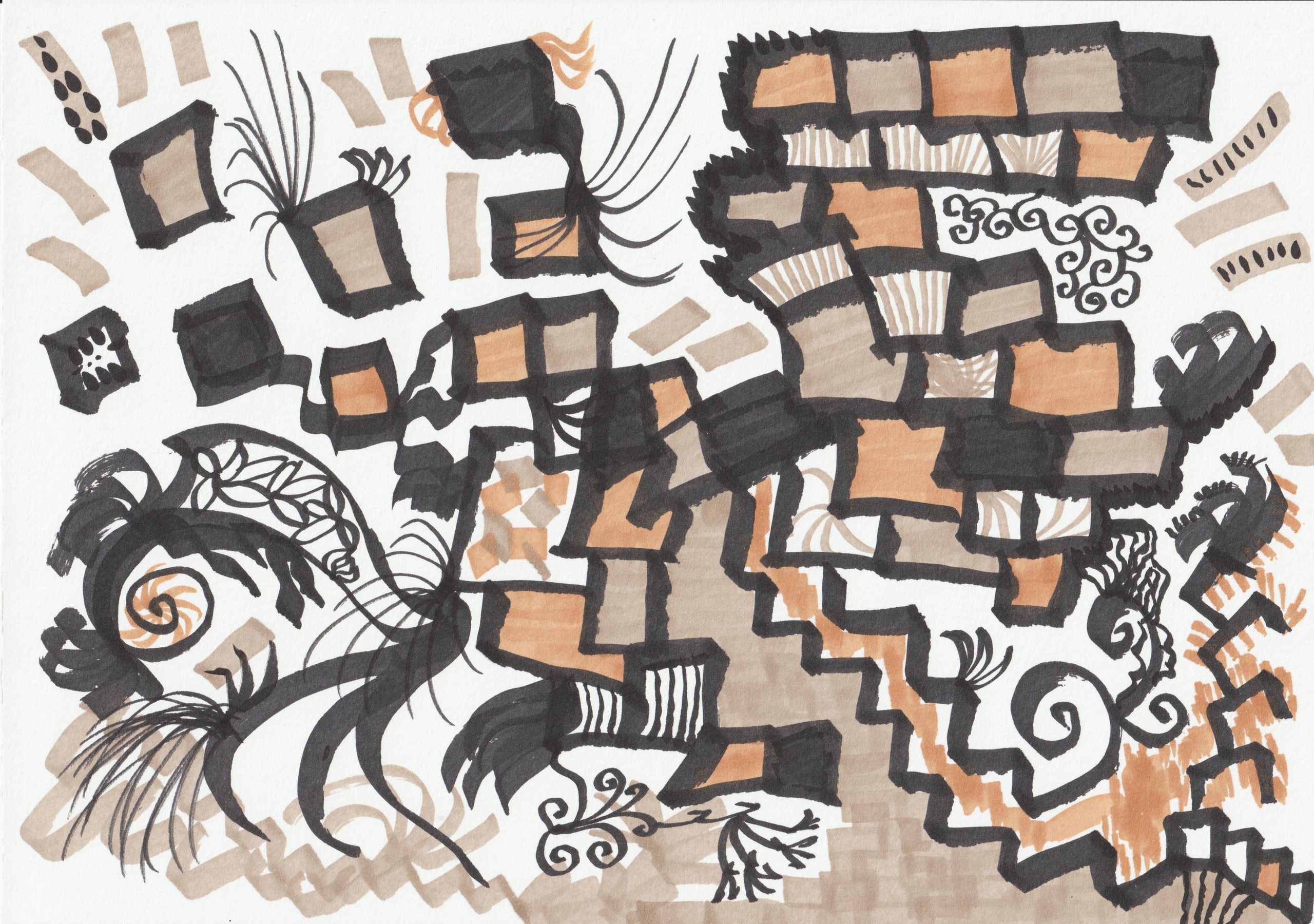
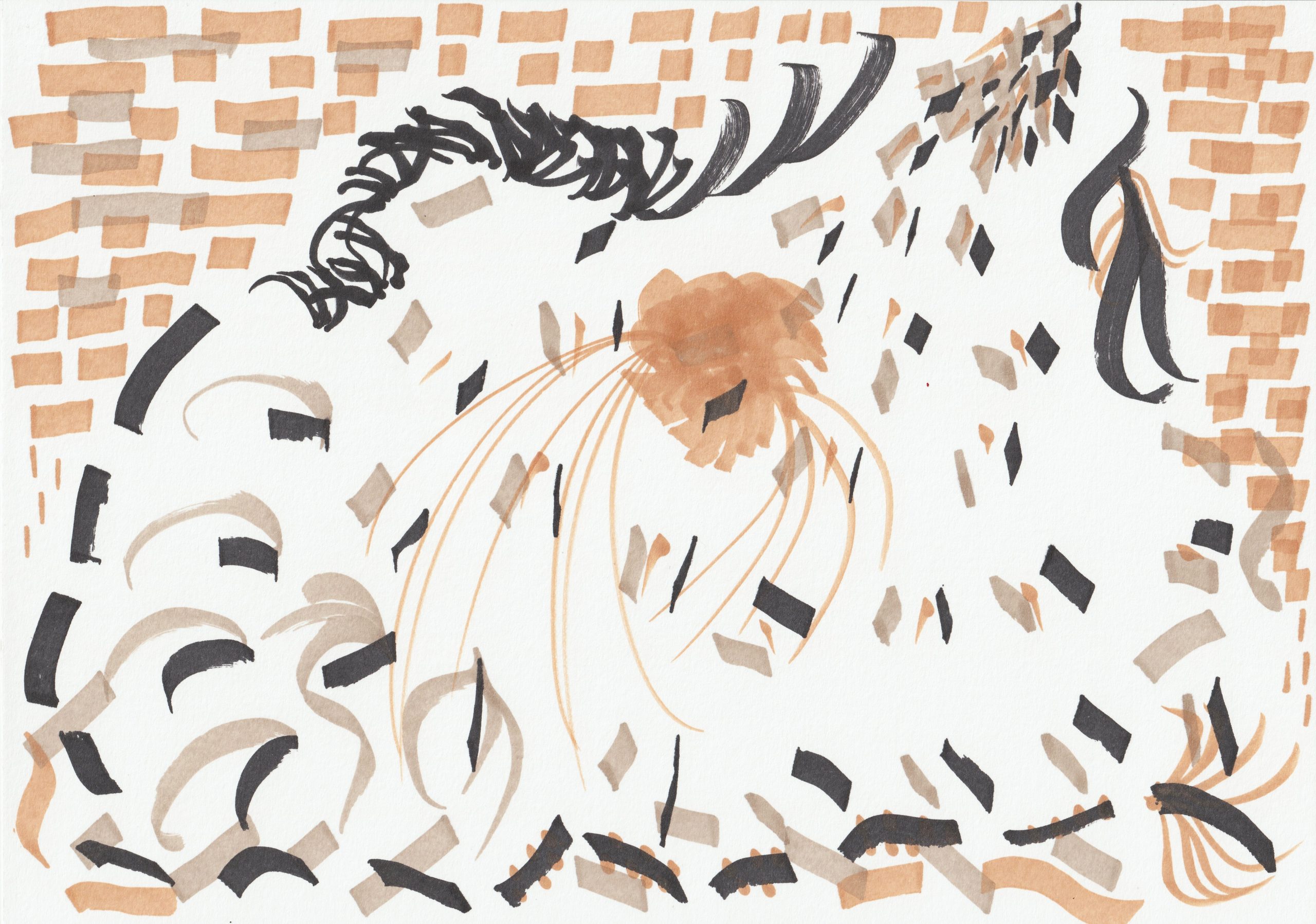
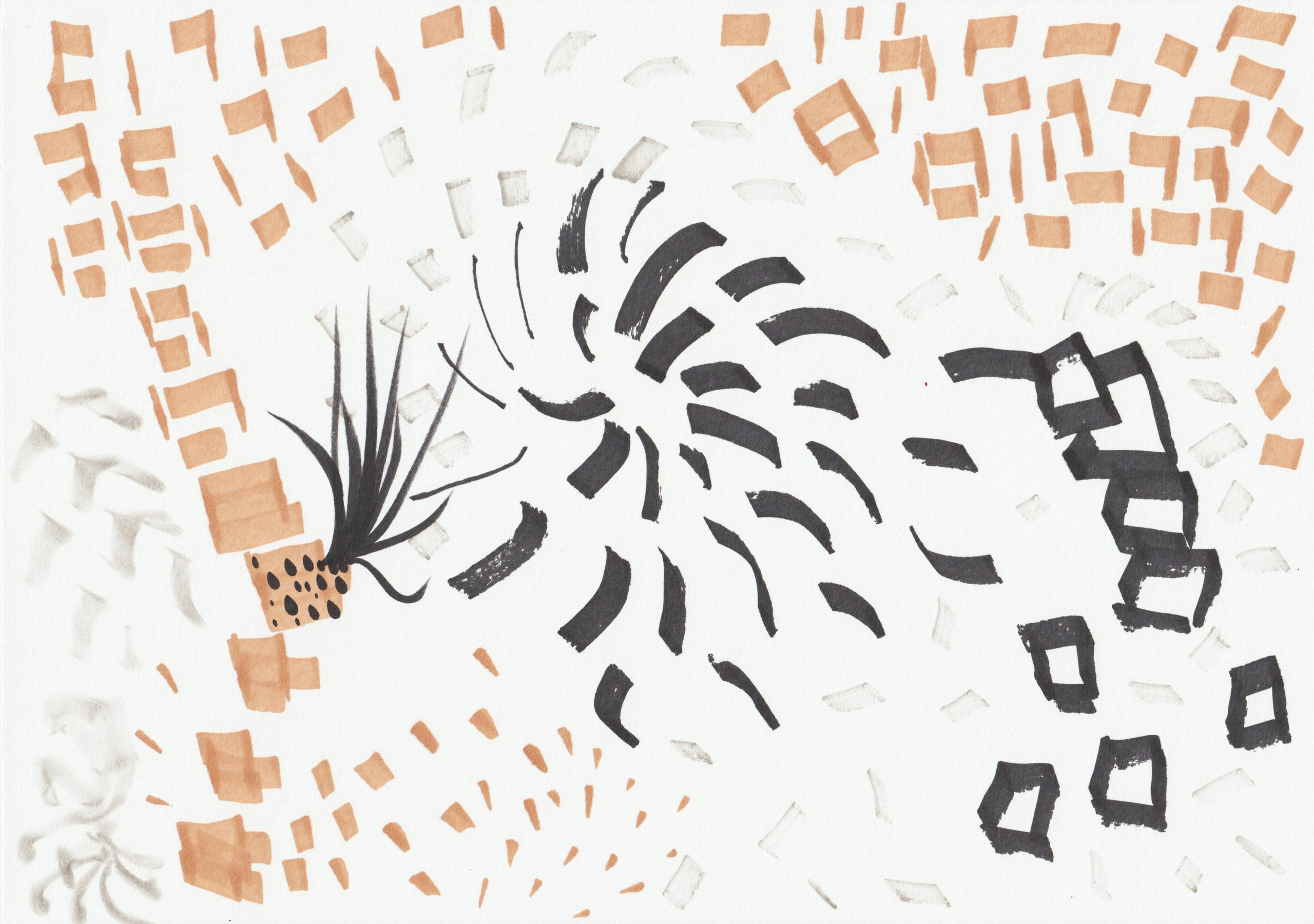
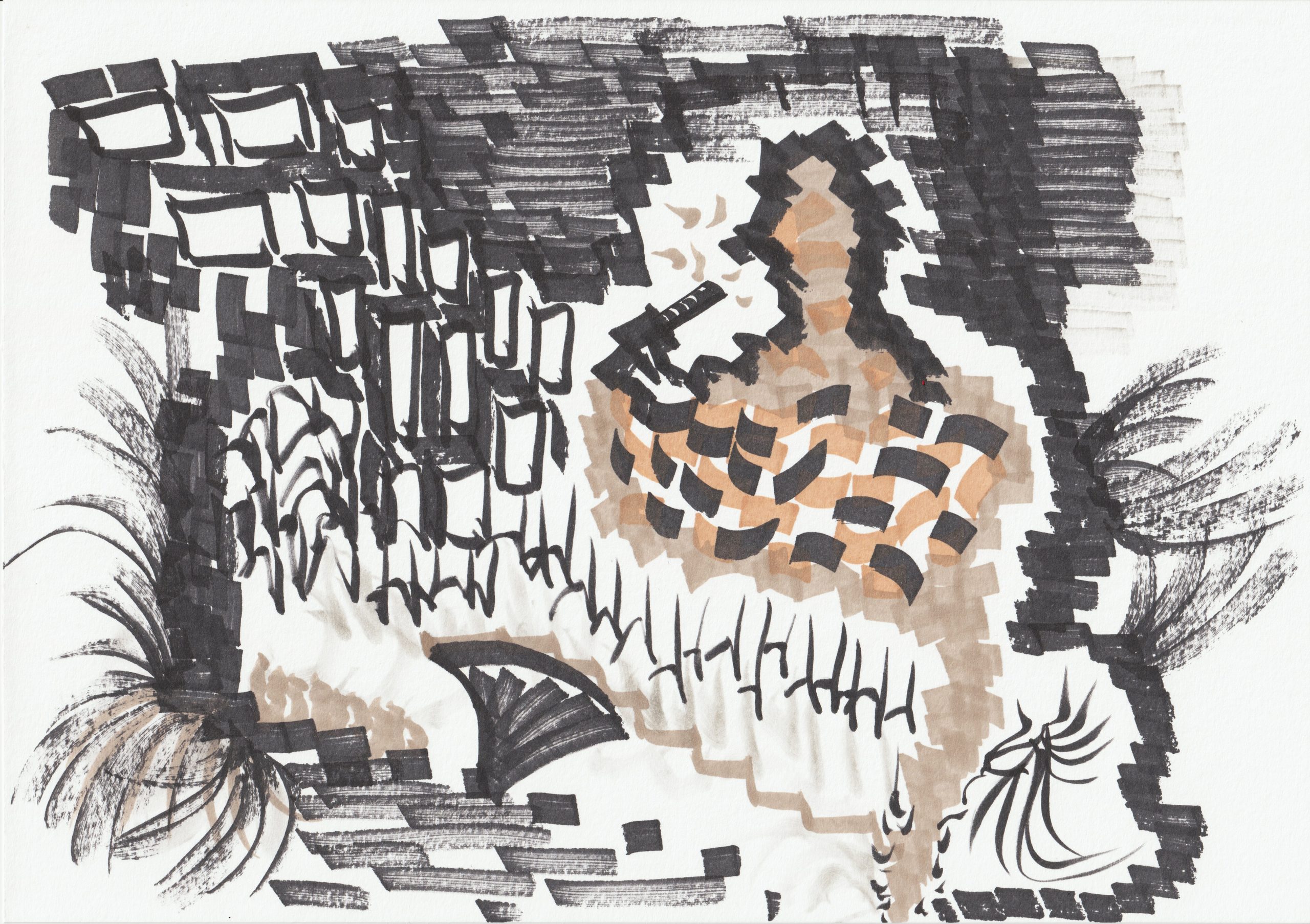
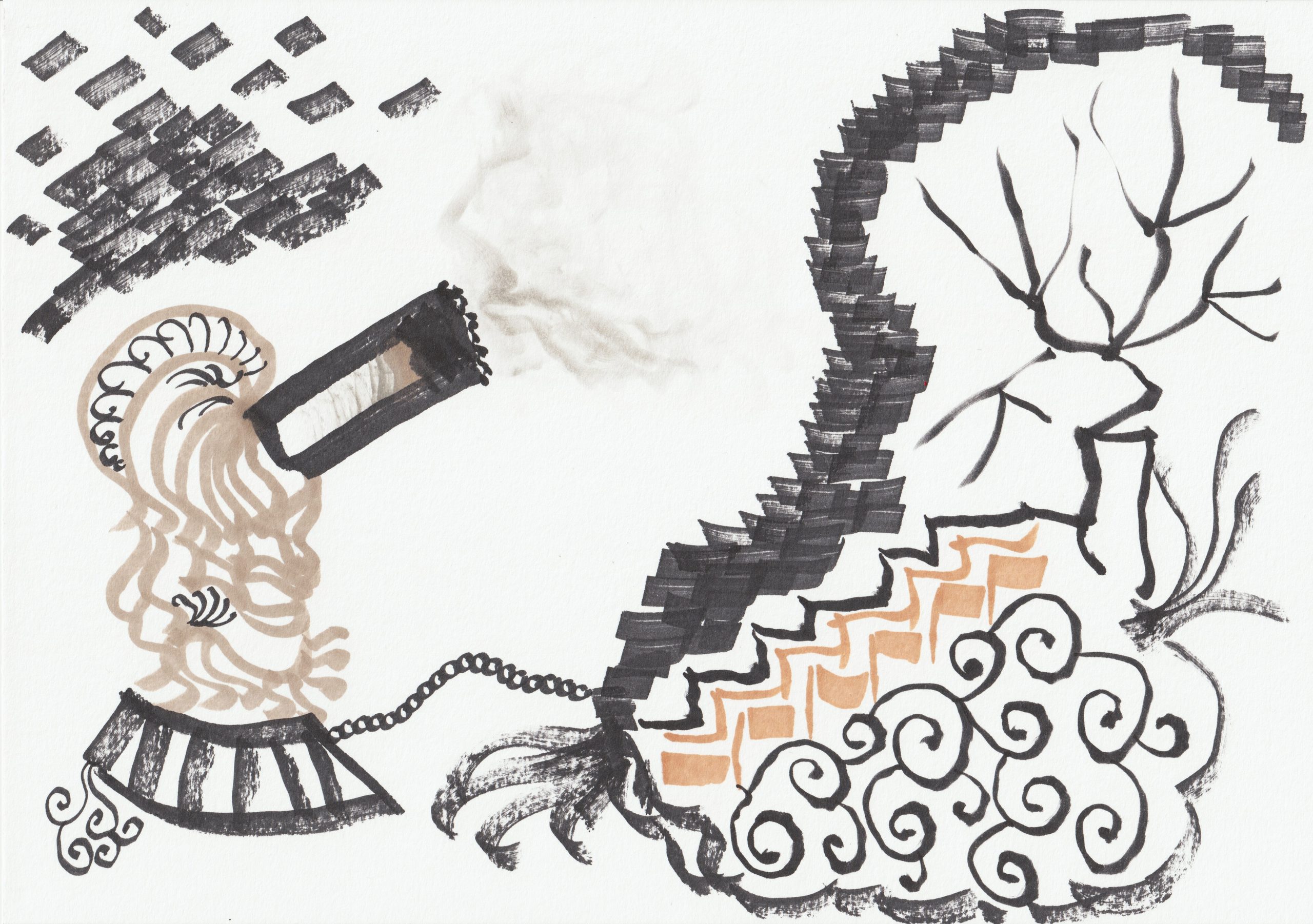
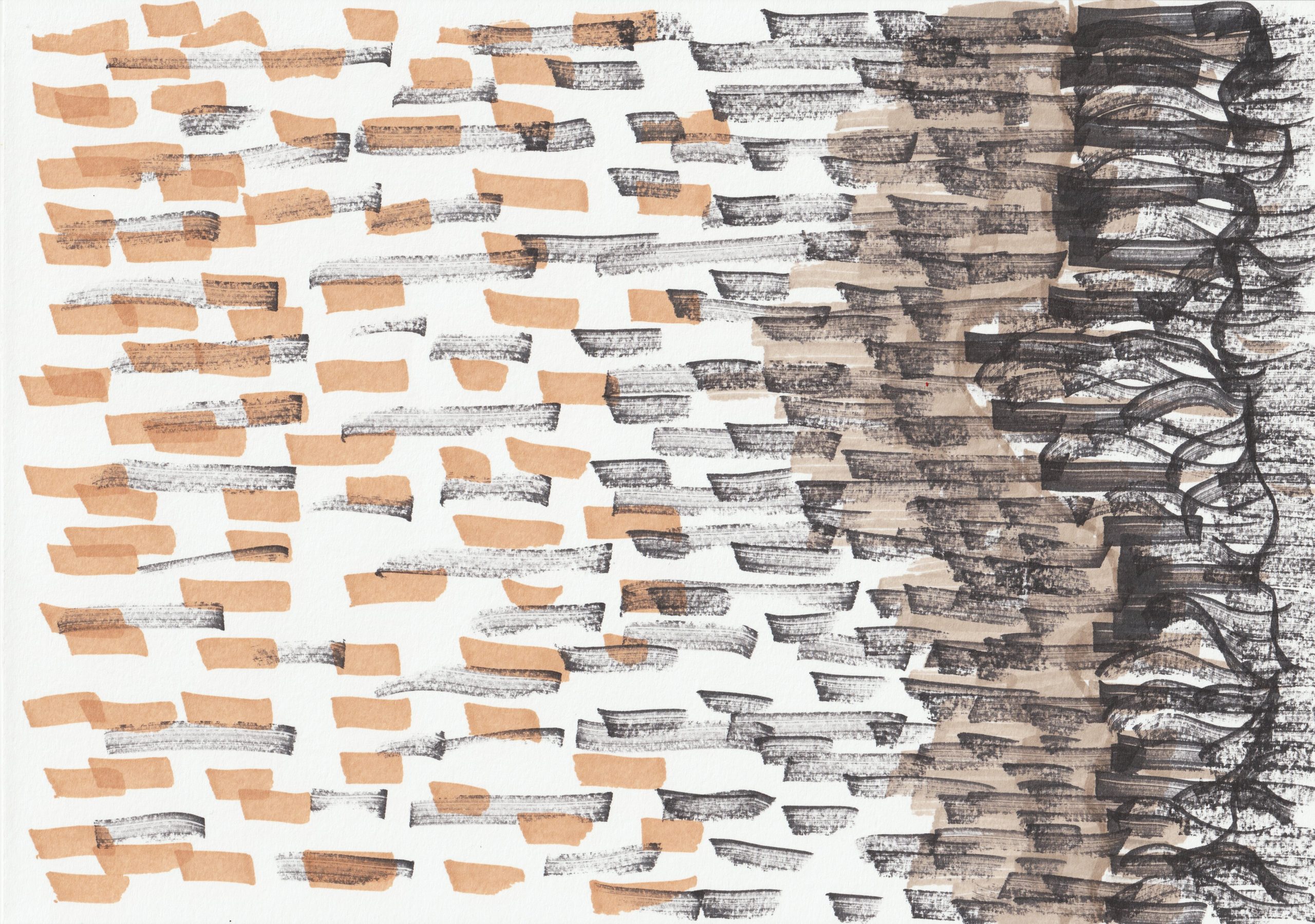
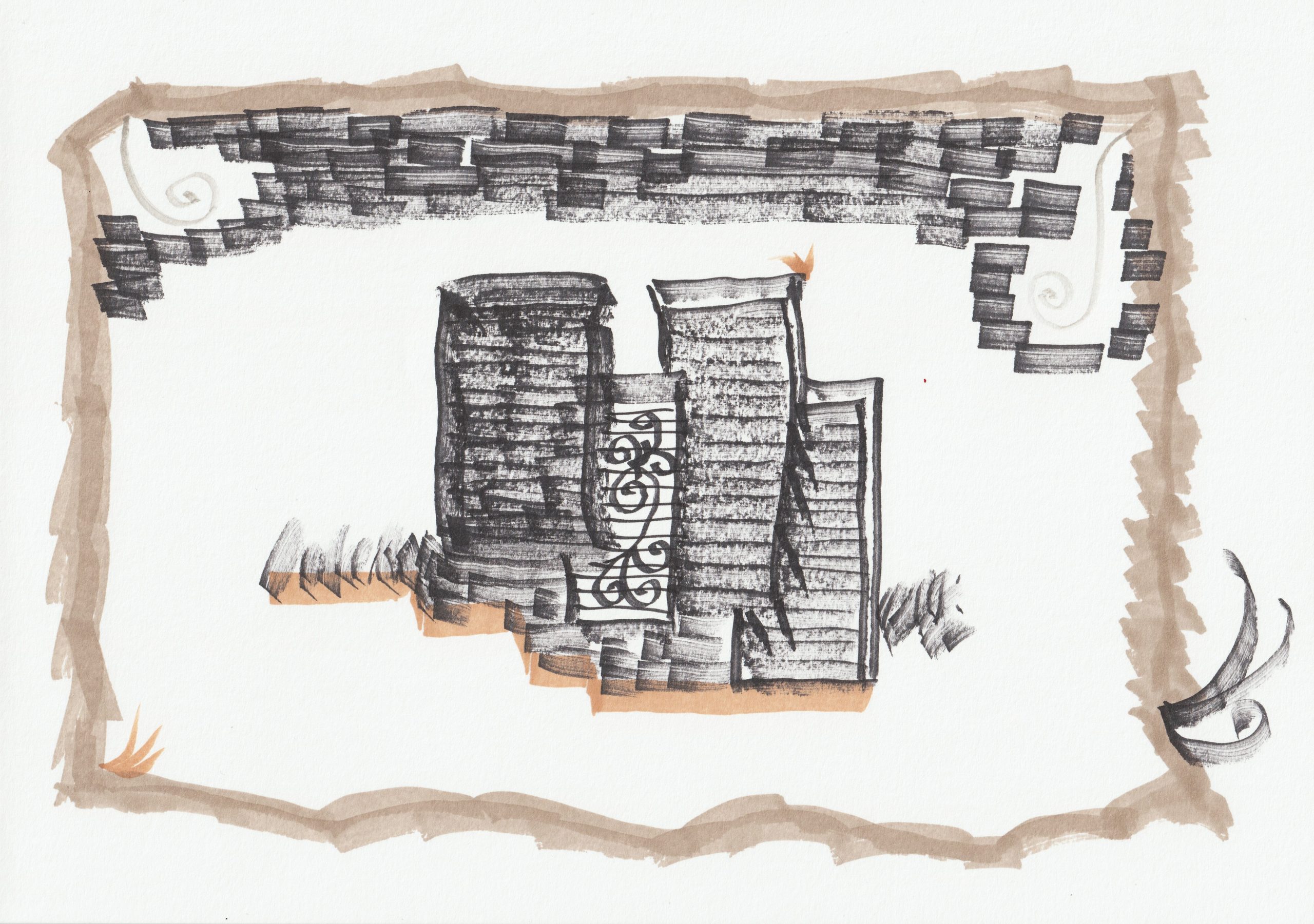
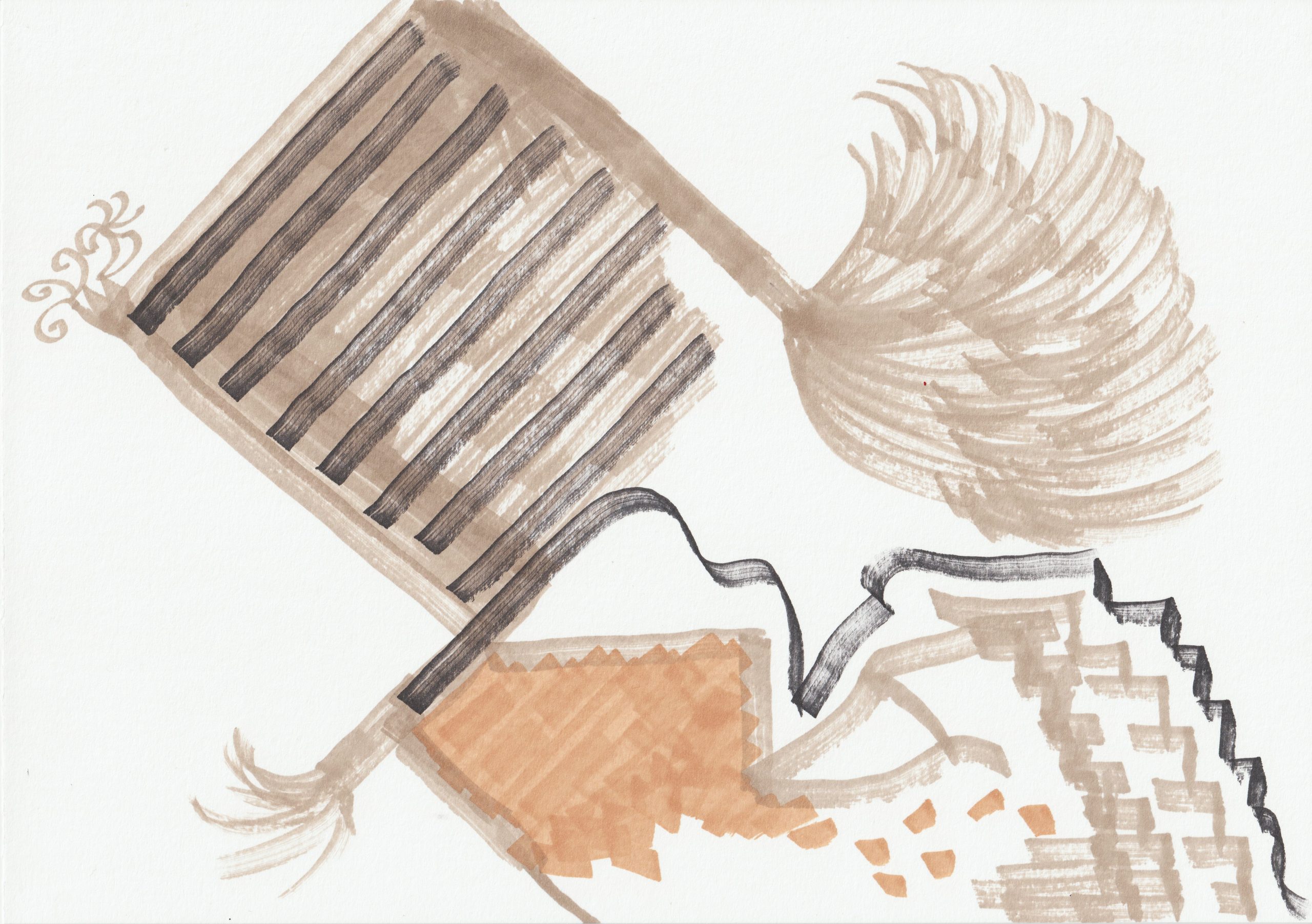
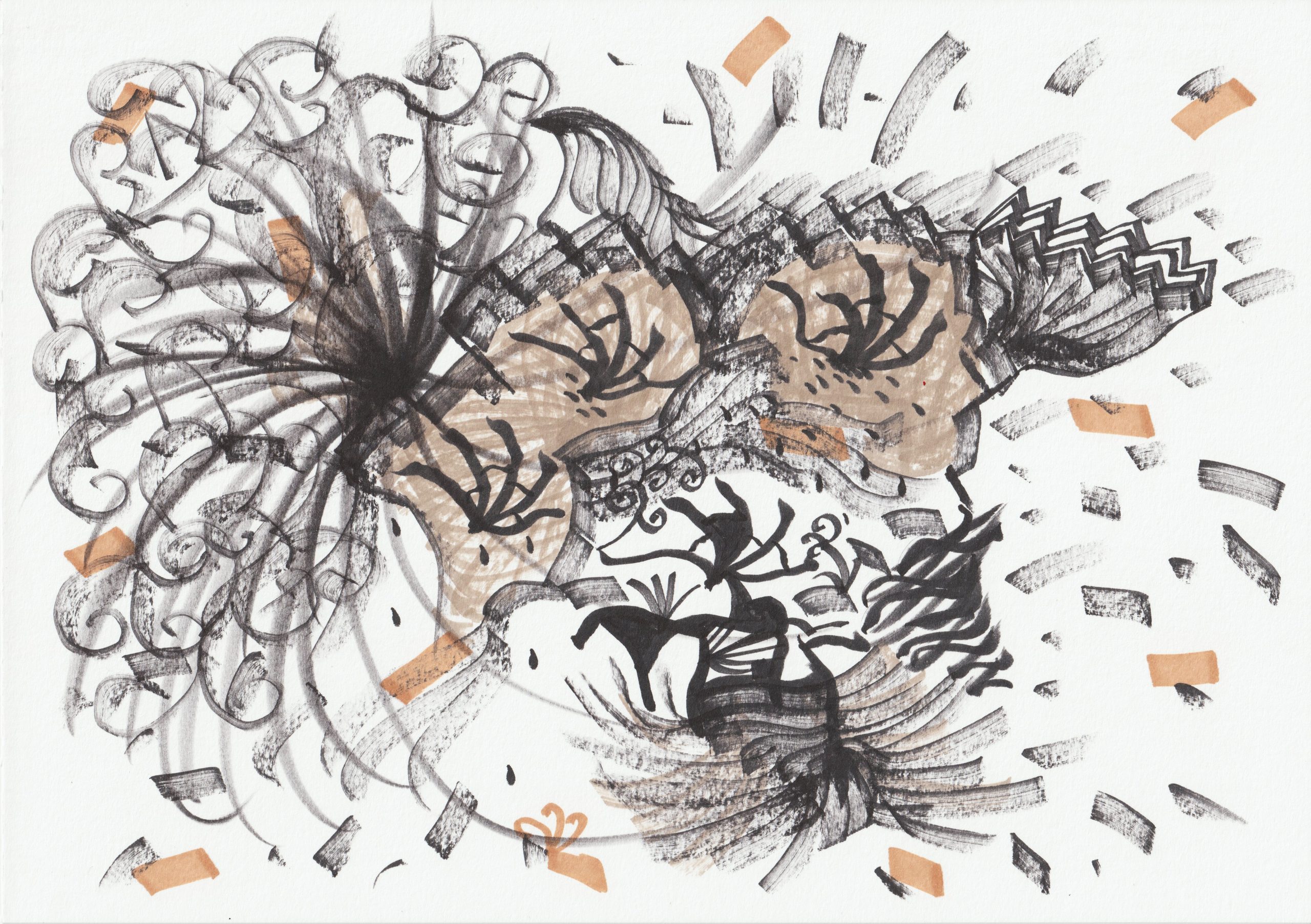
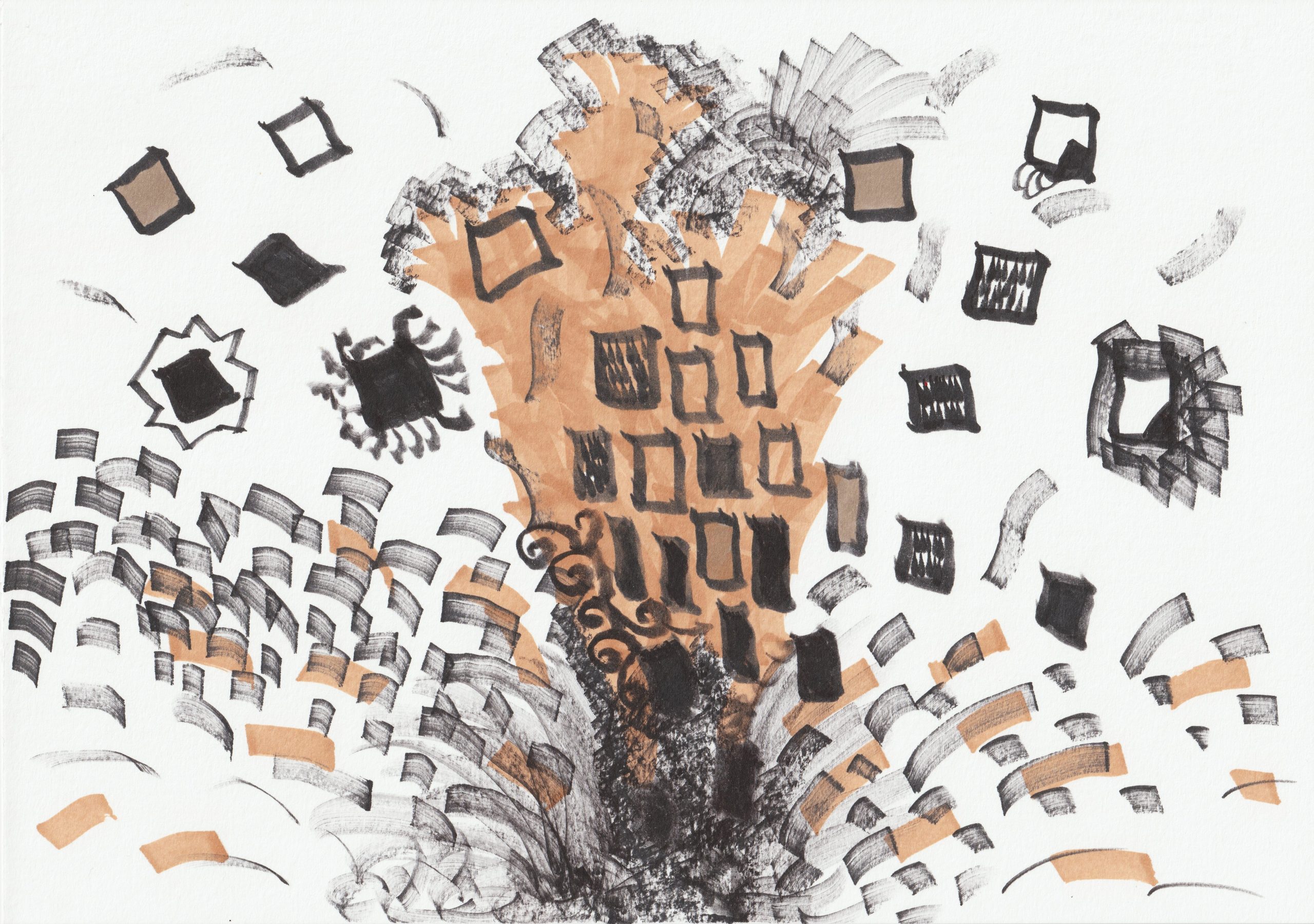
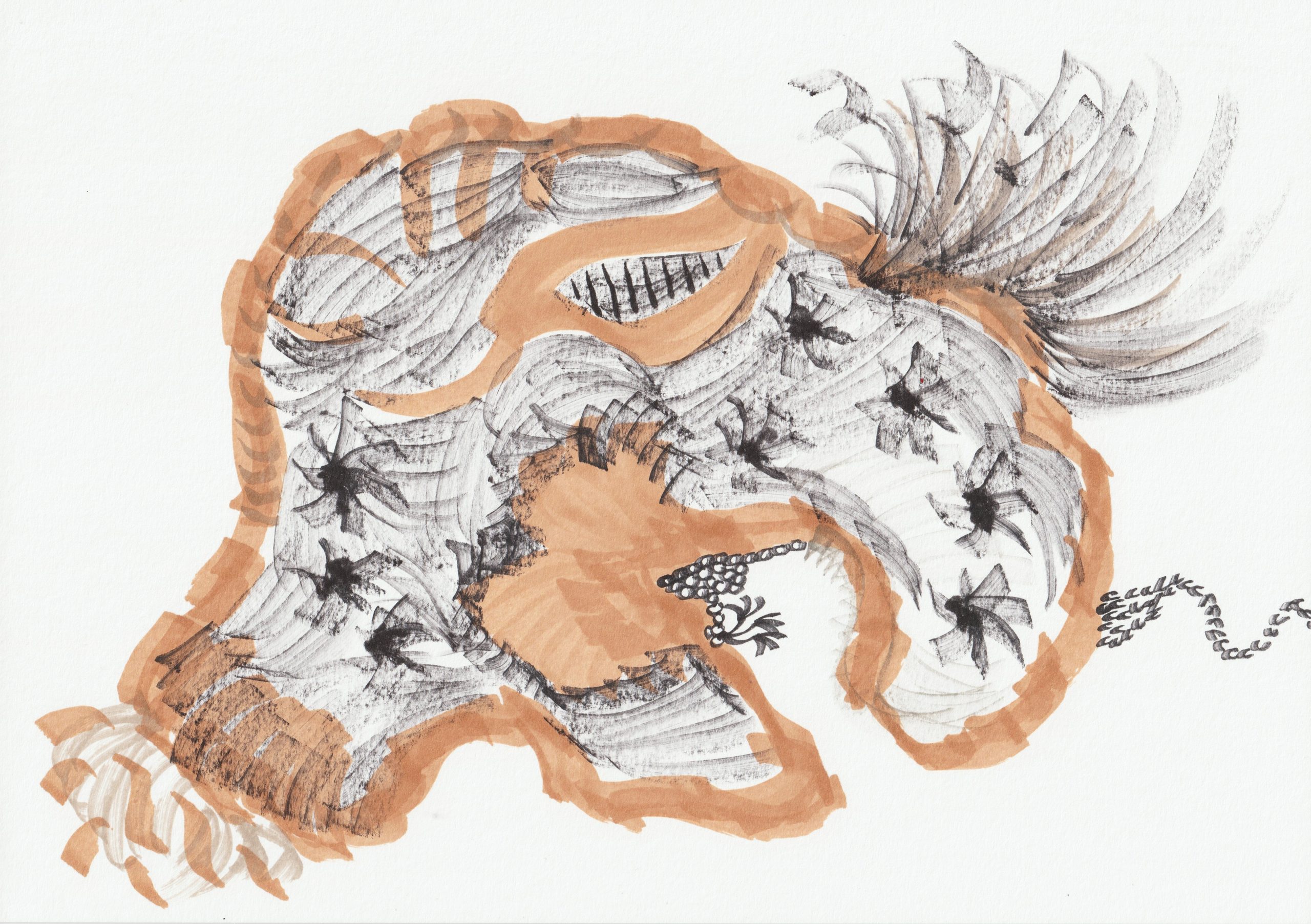
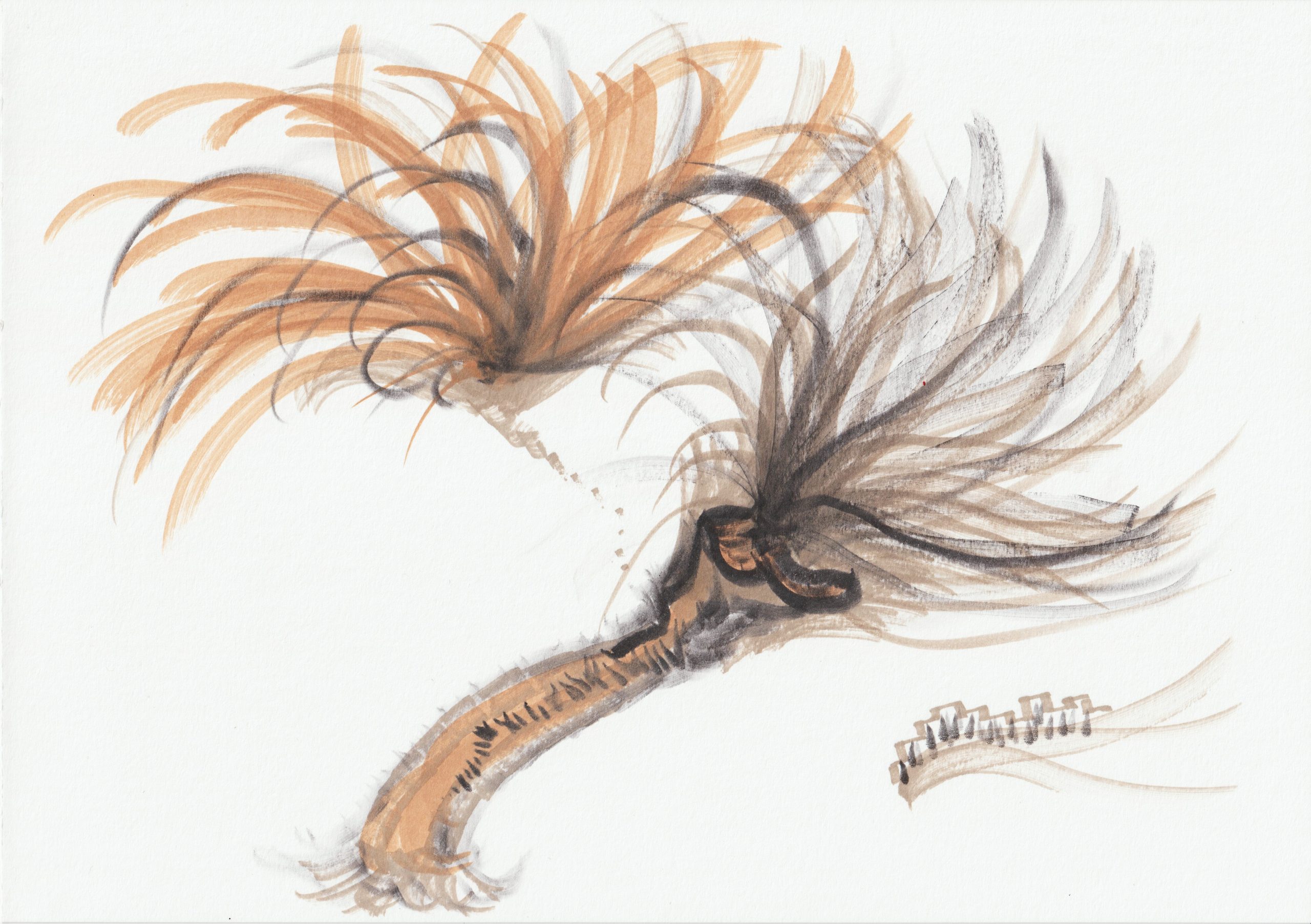
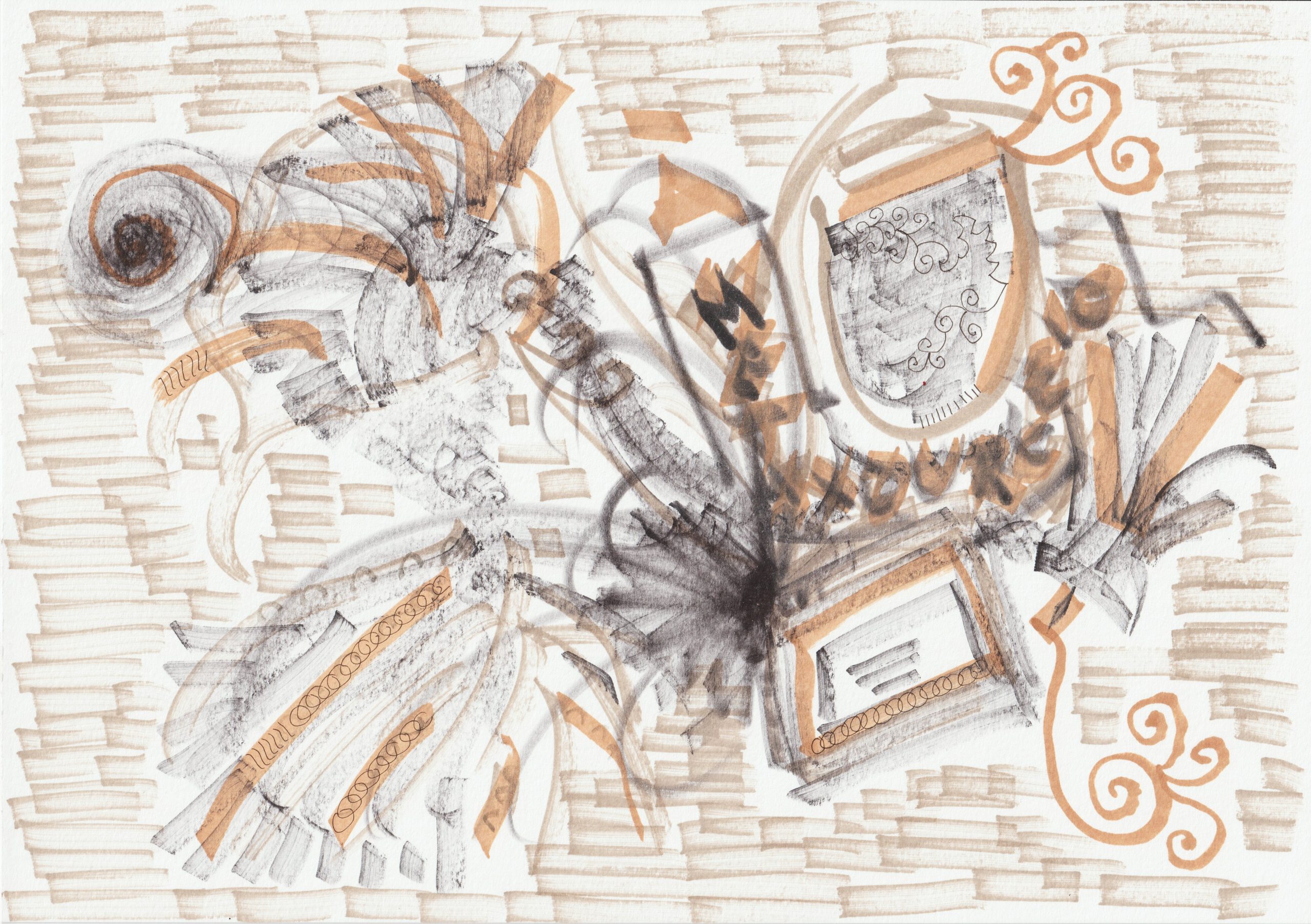
À l’origine de cette série : la nécessité pour l’artiste de rendre avec sincérité, par les moyens modestes du papier et du feutre, quelque chose de ses errances à Metaxourgeio. Sa contrainte principale : utiliser jusqu’à l’usure, sans aucun renouvellement, le noir, le gris froid, le gris chaud, le cannelle et le blanc.
Au commencement de cette série, la végétation semble souveraine. Quelque part au Nord du quartier, parmi quelques immeubles où les feuilles, la poussière et une improbable beauté née de la ruine semblent défendre une cause commune. Puis, se précisent quelques briques, un carrefour, et bientôt le paysage contrasté de Iasonos, avec ses pierres comme suspendues.
Quelques escaliers, une ou deux rencontres, un nommé Panos et son mégot ; la chanson de la fumée. L’usure se fait plus vive, plus douloureuse, et finalement plus pâle. Cela foisonne une dernière fois, dernier renoncement à l’Athènes de carte postale. Le tout s’achève, après deux ou trois tourbillons, dans une formule simple, le titre : « À Metaxourgeio », qu’on distingue sur la dernière pièce après quelque effort.
At the origin of this series: the artist’s need to convey, with sincerity, through the modest means of paper andfelt-tip pen, something of his wanderings through Metaxourgeio. His principal constraint: to use, to the point of wearing them out, without any replenishment, black, cool grey, warm grey, cinnamon and white.
At the beginning of the series, vegetation seems sovereign. Somewhere in the north of the neighbourhood, among a few buildings where leaves, dust and an improbable beauty born of ruin seem to be defending a common cause. Then a few bricks come into focus, a crossroads, and soon the contrasting landscape of Iasonos, with its stones seemingly suspended.
A few stairways, one or two encounters, a man named Panos and his cigarette butt; the song of smoke. The wear becomes more vivid, more painful, and finally paler. It flourishes one last time, a final renunciation of postcard Athens. The whole thing comes to an end, after two or three whirlwinds, in a simple formula, the title: “À Metaxourgeio”, which can be made out on the final piece after some effort.
Στην απαρχή αυτής της σειράς βρίσκεται η ανάγκη του καλλιτέχνη να αποδώσει με ειλικρίνεια, με τα λιτά μέσατου χαρτιού και του μαρκαδόρου, κάτι από τις περιπλανήσεις του στο Μεταξουργείο. Ο βασικός του περιορισμός: να χρησιμοποιήσει μέχρι την εξάντλησή τους, χωρίς καμία ανανέωση, το μαύρο, το ψυχρό γκρι, το θερμό γκρι, το κανέλα και το λευκό.
Στην αρχή αυτής της σειράς, η βλάστηση μοιάζει κυρίαρχη. Κάπου στα βόρεια της γειτονιάς, ανάμεσα σε λίγες πολυκατοικίες όπου τα φύλλα, η σκόνη και μια απίθανη ομορφιά γεννημένη από την ερείπωση μοιάζουν να υπερασπίζονται μια κοινή υπόθεση. Ύστερα διακρίνονται μερικά τούβλα, μια διασταύρωση, και σύντομα το αντιφατικό τοπίο της Ιάσονος, με τις πέτρες της σαν να αιωρούνται.
Μερικές σκάλες, μία ή δύο συναντήσεις, ένας κάποιος Πάνος και το αποτσίγαρό του· το τραγούδι του καπνού. Η φθορά γίνεται εντονότερη, πιο επώδυνη και, τελικά, πιο ωχρή. Η εικόνα σφύζει για μια τελευταία φορά, μια
τελευταία παραίτηση από την Αθήνα της καρτ ποστάλ. Το σύνολο ολοκληρώνεται, ύστερα από δύο ή τρεις δίνες, σε μια απλή φράση, τον τίτλο: «À Metaxourgeio», που διακρίνεται στο τελευταίο έργο έπειτα από κάποια προσπάθεια.